A TWO-MINUTE HISTORY OF QUANTUM COMPUTING
From Feynman's 1981 idea to Google's 2019 supremacy claim — the key milestones, fast.
Every field has an origin story, and knowing it helps explain why this curriculum is structured the way it is — why certain algorithms are named after specific people, and why "breaking RSA" comes up so often. This lesson is a fast, milestone-driven tour, not a history lecture.
The Spark: 1981
In 1981, physicist Richard Feynman gave a talk arguing that classical computers would never efficiently simulate quantum systems, because the resources needed grow exponentially with the number of particles being simulated. His proposed fix was almost cheeky in its simplicity: if simulating quantum mechanics classically is exponentially expensive, why not build a computer that is quantum mechanical, and let it simulate quantum systems natively?
That single idea — use quantum phenomena to compute, rather than merely study them — is the seed every module in this curriculum grows from.
Feynman's 1981 talk was a conceptual argument, not a blueprint. No qubit existed yet, no gate model existed yet. It took over a decade of theoretical work before anyone could describe what a "quantum algorithm" would even look like.
The Theory Builds: 1985–1994
- 1985 — David Deutsch formalized the idea of a universal quantum computer and described the first (toy) quantum algorithm showing a quantum computer could solve a specific problem with fewer steps than any classical computer. You'll implement this exact algorithm yourself in Module 12.
- 1992 — Deutsch-Jozsa algorithm, a generalization of Deutsch's 1985 result, sharpened the case that quantum computers could offer real speedups — though still for a somewhat artificial problem.
- 1994 — Peter Shor published the result that changed everything: an algorithm that could factor large numbers exponentially faster than the best known classical method. Since factoring's difficulty is the security foundation of RSA encryption, this instantly took quantum computing from "interesting physics curiosity" to "national security concern." Governments and companies began funding the field seriously from this point on. You'll study Shor's algorithm in full in Module 14.
Turning Theory Into Hardware: 1995–2011
- 1996 — Lov Grover published a quantum search algorithm offering a (smaller, but still meaningful) speedup for searching unsorted data — useful for a much broader class of problems than Shor's algorithm. Covered fully in Module 14.
- 1998 — the first small-scale experimental demonstrations of quantum computation appeared, using a technique called nuclear magnetic resonance (NMR) with just 2 qubits.
- 2001 — IBM and Stanford researchers used a 7-qubit NMR system to run Shor's algorithm and successfully factor the number 15 (into 3 × 5) — a toy-scale but real proof that the algorithm worked on physical hardware.
- 2011 — D-Wave Systems released the first commercially sold quantum computer, using a different approach called quantum annealing (not the "gate model" this curriculum focuses on for Parts A–D, but important enough to get its own module — Module 22).
The Cloud Era: 2016–2019
- 2016 — IBM Quantum Experience launched, putting a real 5-qubit quantum computer on the public cloud for anyone to use for free. This is the moment quantum computing stopped being exclusively a physics-lab activity and started becoming something a programmer could try from a laptop — the entire premise behind Module 11 of this curriculum.
- 2019 — Google's quantum supremacy claim. Google's 53-qubit "Sycamore" processor performed a specific, deliberately-chosen sampling task in about 200 seconds that Google estimated would take the best classical supercomputer of the time roughly 10,000 years. The task itself had no practical use — it was chosen specifically because it's easy for a quantum computer and hard for a classical one — but it was the first experimental confirmation that quantum advantage was achievable at all, not just theoretically possible.
A term coined by physicist John Preskill in 2018 to describe the current era of quantum hardware: devices with somewhere between roughly 50 and a few thousand qubits, too noisy and error-prone to run large fault-tolerant algorithms reliably, but large enough to be scientifically and sometimes practically interesting. Nearly every real quantum computer you'll interact with in Module 11 onward is a NISQ device. We cover exactly why noise is such a challenge in Module 16, and how the field is working toward the "post-NISQ" fault-tolerant era in Module 17.
Today: 2020–Present
Since 2019, progress has been steady rather than singularly dramatic: IBM has scaled from 65 qubits (2020) to over 1,000 qubits (2023) on its superconducting processors; error correction techniques (Module 17) have moved from theory to early experimental demonstrations; and variational algorithms (Module 20) designed specifically to tolerate NISQ-era noise have become the field's main practical focus, since fully fault-tolerant, large-scale quantum computers are still likely years away.
Key Figures in Quantum Computing
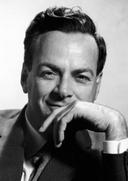
Richard Feynman
1918–1988Physicist, Nobel Laureate
Proposed quantum computers (1981)
David Deutsch
1953–Physicist, Oxford University
Universal quantum computer theory (1985)
Peter Shor
1959–Mathematician, MIT
Factoring algorithm (1994)
Lov Grover
1961–Computer Scientist
Search algorithm (1996)
Deutsch, Shor, and Grover aren't just historical trivia — their algorithms are core modules in this very curriculum (Modules 12 and 14). Knowing the story behind why each one mattered will make those modules land with much more weight when you get there.
Practice Questions
Test your understanding
KEY TAKEAWAYS
Remember these points
The field began conceptually in 1981 when Richard Feynman argued classical computers cannot efficiently simulate quantum systems, and proposed quantum computers as the fix
Deutsch (1985), Deutsch-Jozsa (1992), Shor (1994), and Grover (1996) built the theoretical foundation — all four are algorithms you will implement yourself in Modules 12 and 14
Shor's factoring algorithm was the field's turning point, since it threatened RSA encryption and attracted serious funding and attention
2016's IBM cloud launch and 2019's Google supremacy claim mark the transition from lab-only physics experiments to a field programmers can participate in directly
Today's hardware is in the "NISQ" era — real but noisy and limited in scale — which is exactly why Part C of this curriculum exists